



Educating Present and Future Leaders
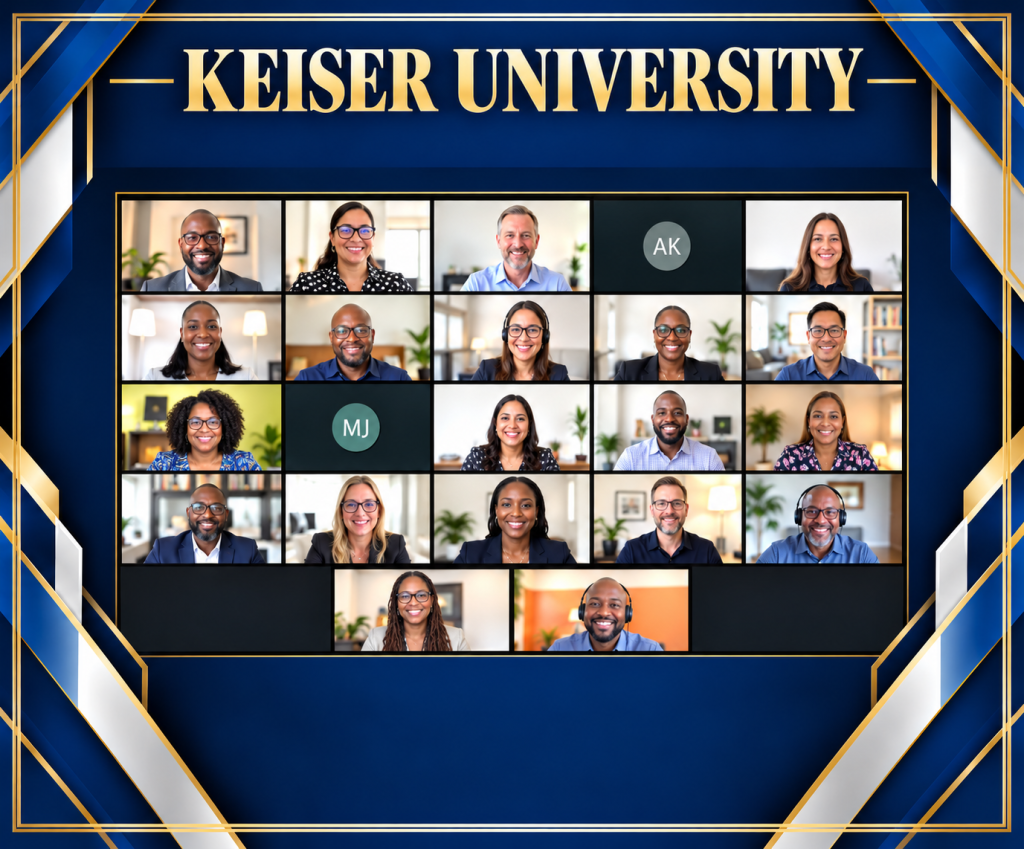
I have been educating leaders since my Air Force Days and in the corporate setting now for over 40 years. In addition, I have been educating in the college setting in the topics of Leadership, Organizational Behavior, Organizational Development, and others for the last 20 years in a variety of higher educational institutions. I am comfortable saying that I’ve probably been in front of thousands of leaders around the world over that time. It has truly been a pleasure and honor to plant my philosophical leadership seeds with these present and future leaders. It has also been a pleasure to engage with them on their journey and to help leaders and students help themselves.
I try to create a Socratic environment in the college classroom where they are not only reading their textbooks, but watching TED Talks, reading outside articles, speaking on topics of choice, and engaging in discussions where they share what they are taking away from the theories and concepts, and reflecting on their own leaders, their leadership, and their organizations. As I tell them, I want you to hold up a mirror to yourself, your leaders, and your organizations as we discuss these concepts and theories. I don’t give exams because, as I tell them, I don’t want you to memorize theories; instead, I want you to reflect on what we’re reviewing and critically analyze the issues.
While there are many definitions of leadership, I have defined it in the following manner:
Leadership
“Leadership is the capacity of an individual in a managerial position to positively influence, engage, and motivate their workforce. One where they demonstrate empathy, compassion, listen to understand, rather than respond, is trustworthy, authentic, and creates a psychologically safe environment. One where they create clarity and minimize uncertainty as much as possible during organizational change. In summary, a leader is one who creates an environment where the workforce feels engaged.”
I share this to have them reflect and consider whether those who work for them would think of them if they read this definition. Or if their workforce would think of the leaders in the organization when they read this definition. One assignment I have them complete as we come up to the end of the class is to share their definition of leadership and what they are taking away from the class.
Takeaways and Lessons for and from my Students
One thing that is going to be a constant is the need for organizations to continue to adapt and change. One of the growing changes is the growing era of Artificial Intelligence (AI). The desired skills needed going forward in the era of AI have been identified as creativity, resilience, flexibility, leadership, and social influence. In addition, organizations, through their leaders, need to create a healthy workplace. This will not be solved by AI; instead, it will require leadership. The students recognize this.
Since I’ve written my book, The BoSS: Behaviors of Smart Supervisors I remind them of the following.
Leaders need to recognize that in today’s organizations and in these times, they play five roles. The five roles are: celebrity, because everyone is watching them. A quasi-psychologist, because of how they are thinking and feeling and how they interact with others. A quasi-sociologist, because of team dynamics, and a quasi-anthropologist, because of the organizational culture they can influence and create. Last, as a director of an orchestra, because just like a director of an orchestra has to bring out beautiful music from different instruments and diverse musicians, leaders need to bring out the best in their diverse teams so they can deliver their services and products. This seems to resonate with them.
What I’ve learned from my students about Leadership
What I’ve learned from them, as we have had discussions throughout the classes, is their hunger for continual learning, wanting to be a better leader, to make a difference, to create a healthy workplace, while taking care of themselves.
In addition, as I read their final papers, I’ve learned the following. In more cases than not, they thought stepping into their role as a leader meant that they would just be in charge and driving their departments forward. That the workers were there to follow their instructions and direction and that they, as leaders had to have all of the answers. As they went through our classes, some seemed surprised, glad, and almost relieved that they do not need to have all of the answers. That they can make mistakes and more importantly their role in creating a healthy organizational/department culture.
What I’ve learned from them as I continue to learn is that the more we learn, the more we don’t know. These are not inexperienced professionals, but those who are furthering their education and working to improve themselves. In most cases, they were promoted to a leadership role because they demonstrated a strong work ethic, were effective in delivering results, and provided promise to be an effective leader. Now they are responsible for creating an environment where their workforce can be successful and deliver results. And they have learned that they do not have to do this alone.
They have learned that leadership is about creating a more human-centered workplace, not less. Something that AI cannot do. That becoming an effective leader is a journey, not a destination. That being empathetic, compassionate, listening to understand, not to respond, treating everyone with dignity and respect, taking care of themselves, and modeling leadership because everyone is watching, makes them a better leader. Demonstrating effective leadership leads to positive bottom-line implications for their respective organizations.
ABOUT THE AUTHOR
Edwin Mourin᷁o – Ruiz, Ph.D.
Dr. Edwin Mouriño is an Air Force veteran, author, Human Capital, and DEI practitioner and speaker. As a human capital practitioner, Dr. Mouriño’s focus has been on helping leaders and organizations help themselves. He is an experienced professional with many years of leading and/or supporting key elements of organizational change projects. Dr. Mouriño is an Air Force veteran who began his career in Diversity Equity and Inclusion (DEI) as a graduate of the DOD-Defense Equal Opportunity & Management Institute (DEOMI) and has also been a speaker.
He brings broad industry experience that includes Fortune 100 companies. He is the founder and president of Human Intelligent (HI) Workplace, an organization focused on helping leaders help themselves through leadership, team development, and executive coaching. He has been and continues to serve as a college professor. He is also a Senior Fellow with the Conference Board on the DEI and Leadership Steering Committees.
He has extensive experience and thought leadership on Human Capital issues and supported organizational change efforts through Leadership Development, DEI, Executive Coaching, Team Development, Executive Retreats, Personality Assessments, and Organizational Change. He has spoken at numerous professional venues and written numerous articles on human capital trends impacting organizations, specifically addressing DE, and is the author and co-editor of several books.



0 Comments