
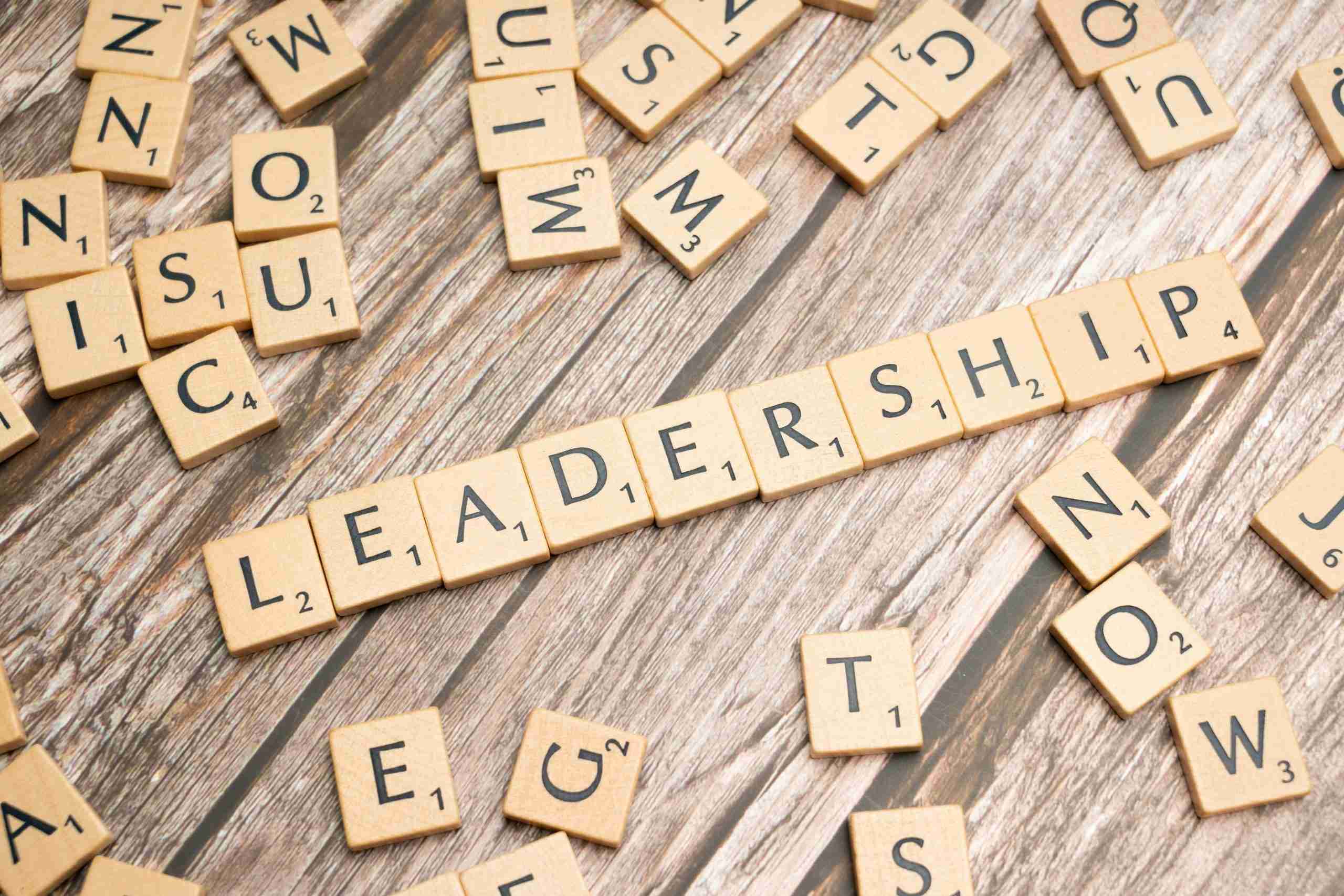


I have always mentioned to my college students that there are plenty of managers, but few leaders. Organizations need both, but I believe leadership is in high demand in today’s workplace. Especially with today’s workplace facing a changing demographic, comprised of an aging and growing multigenerational workforce and a growing younger, multicultural workforce.
State of Today’s Workforce
There is also a changing workforce psychology, with most employees expecting their leaders to care for them, seeking purpose, mastery, autonomy, and happiness in their work environment. Simon Sinek has said that “meaning is the new paycheck”. Appreciation, a simple thank you, was cited as the number one thing workers were looking for in their next employer, with pay being number eight. More workers prefer to work remote or hybrid, post pandemic. In this changing work environment, the workforce is expecting their leaders to care for them. In essence, workers’ expectations are changing, and many organizations and their leaders have not kept up.
All of these changes are impacting employee engagement or disengagement. It has been found that almost 80% of today’s workforce is not engaged, costing companies trillions of dollars. Work has been cited as the 5th cause of death due to stress. It does not help that over 70% of leaders have reported significant stress, and 40% have considered stepping down. This while for 70% of the workforce, their boss is their biggest stressor. Which may have led to 35% of the workforce willing to give up a pay raise to see their boss fired.
Leadership
It has been cited all over the internet that the one considered as the father of management, Peter Drucker, has said: “Management is doing things right; leadership is doing the right things.” If you research the definition of leadership on the internet, you’d probably find 100s if not 1000s of definitions. Here I’d like to add one more.
I define leadership as the capacity of an individual in a managerial position to positively influence, engage, and motivate their workforce. One where they demonstrate empathy, compassion, listen to understand, rather than respond, is trustworthy, authentic, and creates a psychologically safe environment. One where they create clarity and minimize uncertainty as much as possible during organizational change. In summary, a leader is one who creates an environment where the workforce feels engaged.
Workplace Dynamics
In 2025, uncertainty became the defining term for the second time in the last 35 years, only second to the pandemic. This when our brains have a high intolerance for uncertainty. It does not help that organizations have to continue to adapt and change due to the increasing growth of AI, layoffs and downsizing continuing to happen, a growing skills shortage, and growing multigenerational and multicultural workforce. This has led to the point that our brain needs a leader to create an environment that feels safe and certain, who communicates well and makes understanding easy.
It has been found that when organizations create high trust workplaces, it leads to less stress, higher productivity, fewer sick days, more engagement, and less burnout. When leaders demonstrate being more aware, wise, and compassionate of their workforce needs, it leads to a more trusting and committed workforce, and one where the workforce feels more psychologically safe and satisfied with their job. This seems to become visible in the Great Place to Work organizations where their workers seem to experience over 8 times greater revenue than those not in these categories.
Organization and Workforce Needs: A Business Imperative
This is why I believe organizations going forward and their workforces, are going to need leaders who recognize the five roles they play in a leadership role. In addition while working to create a Human Intelligent (HI) Workplace, especially in the growing age of uncertainty and Artificial Intelligence (AI). How organizations and its leaders handle the above can lead to an engaged, disengaged, or don’t care workforce.
Watch: The Five Filters of Today's Leader

The BoSS and Human Intelligent Workplace
In the book, The BoSS: Behaviors of Smart Supervisors, I highlight the following the five roles that all play in a managerial capacity.
- A celebrity: because everyone is watching what they say and do, and if it coincides.
- A quasi-psychologist: because they show up with their own strengths, weaknesses, and insecurities. The same as those who report to them.
- A quasi–sociologist:because of team dynamics.
- A quasi–anthropologist: because of organizational culture.
- A director of an orchestra: because, just as this individual has a responsibility of bringing beautiful music from different musicians and instruments, a boss has a responsibility to bring out the best in their diverse team members.
I have defined a Human Intelligent Workplace as: Effective leadership behaviors that create an organizational culture that workers experience is to be engaged while collaborating with a diverse team. The workforce feels psychologically safe, listened to, and understood by leaders. The workforce finds satisfaction with their work and organization.
The underlined terms have special meaning with extensive research behind each. Collectively, it defines what a healthy workplace can and needs to be. In the growth of AI, organizations will need effective leaders and more HI, not less.
We need to remember that leadership starts with the mind. Your mind determines your choices, your choices determine your actions, and your actions shape your leadership (Carter & Hougaard, 2025). In essence, you are how you lead. Your leadership is an extension of your relationship with yourself (Anderson, 2023). Remember this is a journey, not a destination. So in summary, leadership is a business imperative and advantage for uncertain times. How ready are your leaders and, in turn, your organizations?
ABOUT THE AUTHOR
Edwin Mourin᷁o – Ruiz, Ph.D.
Dr. Edwin Mouriño is an Air Force veteran, author, Human Capital, and DEI practitioner and speaker. As a human capital practitioner, Dr. Mouriño’s focus has been on helping leaders and organizations help themselves. He is an experienced professional with many years of leading and/or supporting key elements of organizational change projects. Dr. Mouriño is an Air Force veteran who began his career in Diversity Equity and Inclusion (DEI) as a graduate of the DOD-Defense Equal Opportunity & Management Institute (DEOMI) and has also been a speaker.
He brings broad industry experience that includes Fortune 100 companies. He is the founder and president of Human Intelligent (HI) Workplace, an organization focused on helping leaders help themselves through leadership, team development, and executive coaching. He has been and continues to serve as a college professor. He is also a Senior Fellow with the Conference Board on the DEI and Leadership Steering Committees.
He has extensive experience and thought leadership on Human Capital issues and supported organizational change efforts through Leadership Development, DEI, Executive Coaching, Team Development, Executive Retreats, Personality Assessments, and Organizational Change. He has spoken at numerous professional venues and written numerous articles on human capital trends impacting organizations, specifically addressing DE, and is the author and co-editor of several books.

0 Comments