
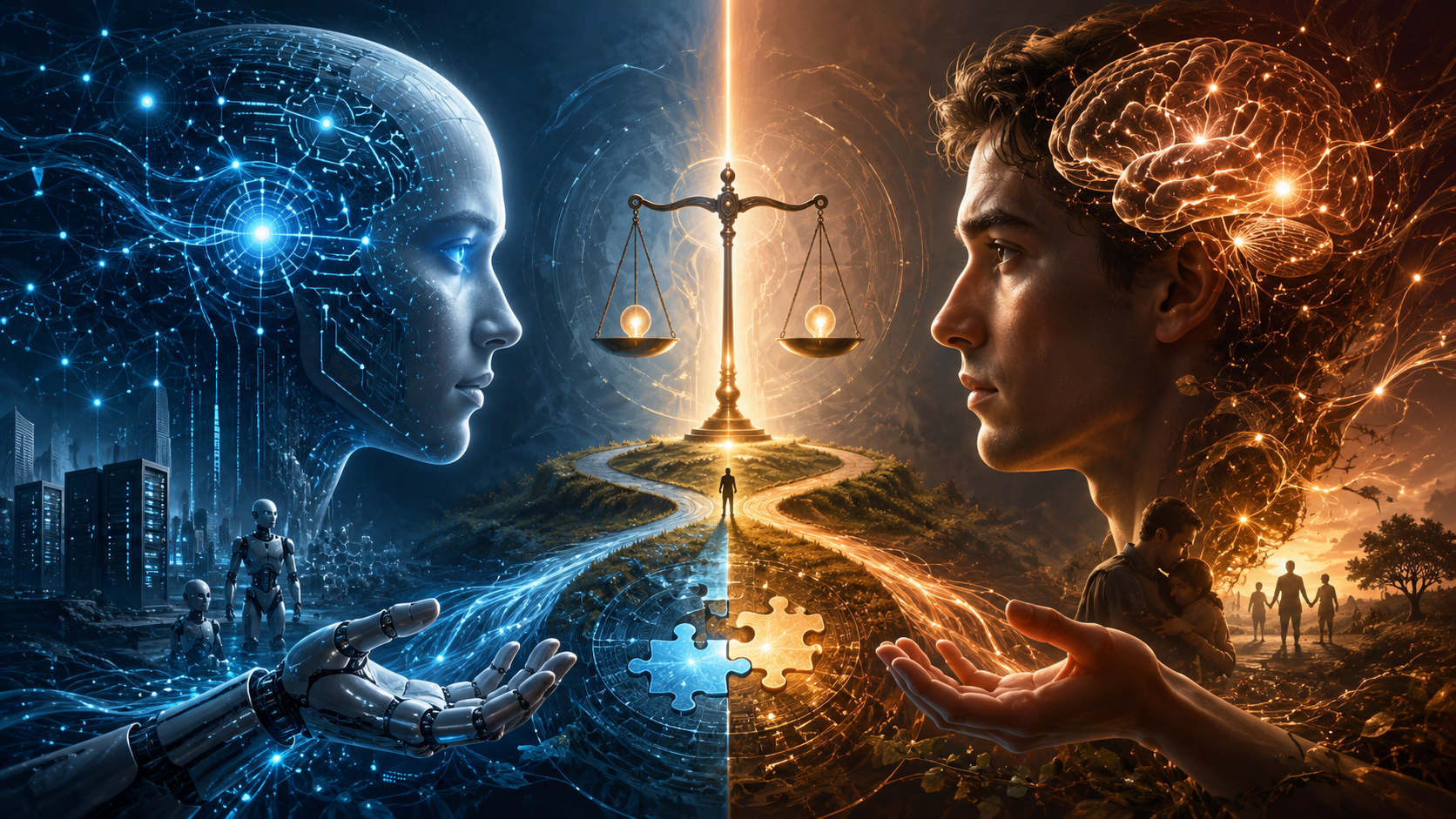


The following movie, Mercy, is all about the integration of AI and HI. It is about a cop accused of killing his wife, and the judge and jury is AI. It brings up some interesting both ethical and moral dilemmas about both technology and humanity.
He has 24 hours to prove his innocence, and he can get the assistance of AI, if he uses it right. Unfortunately for the accused, there is plenty of circumstantial evidence to consider him guilty. It does not help that he and his wife have been having marital problems since his partner was killed, that he’s been drinking heavily, that his wife has called the cops on him, and that she was having an affair. Without sharing much more of the plot’s twists and turns in case you decide to watch it (I recommend it), nothing is what it seems.

As we’ve seen in real life, there are plenty of stories of people accused of crimes later shown they did not commit. The Central Park 5 of 5 teenagers accused of raping a woman, later known as the Exonerated 5 after having spent many years in prison for a crime they did not commit- is just one of many real-life instances that come to mind.
The movie above highlights the realities of the moral and ethical dilemmas faced by organizations as they pursue AI transformation. There are numerous stories coming out of organizations being enamored by the shiny new object, AI, and laying off thousands of people only to have to rehire them. IBM is one that laid off thousands for AI only to rehire them due to AI. Klarna reversed its AI customer service strategy after pushback from its customers. I, for one, do not like speaking with a robot for my customer service needs.
There is now something known as AI burnout and AI backlash. It does not help that some CEOs continue to claim that AI will be the replacement for humans. There was an interesting posting on LinkedIn where it had some of the following comments: Zuckerberg, “your job is just keystrokes”, Ford CEO, saying “AI will replace half the white-collar workers”; Fiverr CEO, saying “AI is coming for my job too”; and Bolt CEO, saying, “HR caused people problems”. It was interestingly titled “The real hallucinations aren’t AI. It’s CEOs who think humans are the problem.” Meta is one that recently has been involved in a multi-billion lawsuit due to allegations of not putting up protections for minors by technology.
This brings up a variety of both ethical and moral issues. When I used to teach Ethics to managers, there was something I shared. When faced with an ethical dilemma, ask yourself: is it legal, is it win-win, and do you mind reading about it in the paper (today on technology medium)? While an organization has a responsibility to its shareholders, what about its workforce? After all, it is their workforce that is delivering their products and services.
Today’s organizations are faced with a slew of changes. They include a changing workforce psychology and expectations from their leaders and organizations. Increasingly, today’s workforce is looking for purpose, happiness at work, and for their leaders to care about them. There is a growing, aging, multi-generational, and multi-cultural workforce. A growing skills shortage, while AI continues to evolve and create growing uncertainty for the workforce. This is when humans are not neurologically wired for uncertainty.
So will today’s organizations continue the mistakes of organizations of the past that either have disappeared or are a shadow of what they once were? Sears at one time one of the biggest organizations in the world; it once had 3400 stores, it is now down to 5 and soon getting to 4. Blockbuster who at one time had a video store on almost every corner with 9000 stores and now only has one. GE was a mega corporation and today is a shadow of itself and was the pioneer with Jack Welch of Rank and Stack, which ranked employees and terminated the bottom 10%. Others followed suit; now many do not use this process. Circuit City at one time was in the book Good to Great as an organization for others to model, today it does not exist.
Using AI going forward and not addressing any human workforce issues is going to create problems, and I believe a competitive disadvantage for organizations in the long run. Even Amazon, which is ramping up the use of AI, has an interesting take on today’s workers. Various articles have highlighted that Bezos’s focus on the client and belief that workers should be pushed or forced to leave the organization in turn create increased turnover. Not sure why they believe this, since it has been shown that turnover costs an organization 150% of an employee’s salary and up to 400%. Time will tell if this philosophy pays off or if they end up like GE.
I have suggested that in the era of AI, organizations will need HI. The following is how I define an HI Workplace. As you read it, ask yourself: does it describe your organization, and would others describe it this way?
HUMAN INTELLIGENT (HI) WORKPLACE
A Human Intelligent (HI) Workplace is defined as one where leaders model effective leadership behaviors by creating an organizational culture where the workers’ experience is one of being engaged while collaborating with their diverse team members.
It is a workplace where the workforce feels psychologically safe when raising different perspectives, taking risks, being innovative, and/or being creative. It is a workplace where the workforce feels listened to and understood by their leaders. Itis a workplace where the workforce finds fulfillment in the work they do and, in the organization, they work in.
I believe that for organizations to create a HI Workplace, they are going to need effective leaders like the one defined below. The question for you if you’re a leader is does this describe you, would your staff say this describes you? If you’re in Human Resources, does this describe your leaders?
Leadership
“Leadership is the capacity of an individual in a managerial position to positively influence, engage, and motivate their workforce. One where they demonstrate empathy, compassion, listen to understand, rather than respond, is trustworthy, authentic, and creates a psychologically safe environment. One where they create clarity and minimize uncertainty as much as possible during organizational change. In summary, a leader is one who creates an environment where the workforce feels engaged.”
The considerations for organizations and their leaders is to reflect on their decisions when it comes to AI and their workforce and what ethical and moral dilemmas they bring up. Are they creating a great place to work, a healthy organizational culture, and a workplace where the workforce feels engaged? All human workplace issues that have bottom-line implications

0 Comments