



Peter Scrooge was proud of doing the right things at the right times. Just like his parents, he had high expectations of himself and everyone around him. He was almost 40, single, an engineer, a workaholic, a mid-level manager, striving to continue to grow his profession, and determined not to let anyone or anything get in the way of his goals. He worked for a large utility organization in the Southeast.
Ghosts from his Past
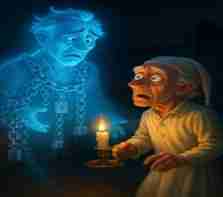

Peter grew up as a military brat, as his father was a Marine officer through and through. His mother was a nurse. He moved around early in life due to his father’s military career. This served both as a plus because he could adapt wherever he went, but also as a negative because he did not establish long-term relationships with anyone. He had a younger brother and sister, which were the extent of his relationships.
His parents had both strong personalities and high expectations of everyone around them, especially their kids. Peter, being the oldest, received the brunt of their expectations. They expected only A grades in school and for him to be the best in whatever sport he participated in. They were both perfectionist, almost like micromanagers (or helicopter parents), who seemed to find only what he did wrong or not good enough. This drove Peter to work constantly at being right, deliver results beyond expectations, and to be, well, perfect.
This drove his work ethic, approach with others, and expectations of anyone who worked with him or for him. Work for him was everything. He’d rise at 4:30am to go for a run and workout. He was always in the office by 7:00am, earlier than anyone else. Being in the office until 8:00pm was not out of the ordinary for him, especially to deliver on what was expected of his management team and clients. He thought the whole “work-life balance” concept was an excuse for those who were weak or just did not have a strong work ethic.
His approach to management was to be tough on his team and always expect the best from all, no exceptions. In a certain way, he was how he led. Tough, high expectations, a perfectionist, kept his eye close to what his team was doing, ensuring things were done right. Just like his parents did with him.
Ghosts from his Present


His work ethic and tenacity had paid off. He was three years into the company and was already a senior manager, hoping to make director soon. He had 4 supervisors and 30 employees under his responsibility. He had taken over the department in the last 2 months, and his reputation was well known as a demanding leader who only expected the best from his team. In his first meeting, he made it clear to his supervisors that he would not tolerate mediocre performance. If any of them or their staff had a problem with this, they should consider another line of work or department.
His director knew of his performance and expectations of others. He occasionally tried to coach him to hold to his performance standards, but to also work on his intensity with his team and others. As he was perceived as someone that others considered of one that could come across as difficult to work with. Peter listened even though he did not agree, as his results spoke for themselves.
During his time in the business, he had also established a relationship with the psychologist of the organization, George. He met him at lunch one time, while having lunch alone, which he preferred, and what started off as a casual lunch conversation grew to more of a friendship. Something that completely surprised Peter, since he did not have many friends, actually any friends, just colleagues to work with. George was a very good listener, something driven by his profession. Peter was more of a loner and was not married or dating. He dated before but found women to be too demanding and expecting too much of him. He felt he did not have time for this. His work was his priority, and everything else was secondary. He rarely spoke with his siblings and parents unless they called him.
In his new role, expectations were high since his predecessor did not seem to have met the department objectives, which is why Peter was promoted into the role. Management knew he would deliver no matter what. It seems that he came in pretty intensely, because one of his supervisors had begun looking for a new role and moved on. This only added to Peter’s pressure, since now he had a dual role: his leadership role and the one of the supervisor who moved on. He felt he had to take on the role of supervisor until he could replace her, since he did not feel anyone on the team could do it like he wanted it done.
He started to spend even more hours at work, which meant less sleep or time to work out. He increased the pressure on his team, which only led to more mistakes being made in the department. This started to gain visibility from management. It did not help that one of his employees had filed a discrimination complaint with the Equal Employment Opportunity Commission (EEOC). She did not feel comfortable that Human Resources (HR) would do a fair job, so she went outside. The complaint was filed because of some sexist language that Peter had used in an old hands staff meeting.
The excessive hours he spent at work, along with the extra stress of delivering on the department objectives, and now the discrimination complaint, started to get to Peter. He was feeling more tired than usual. He did not seem to connect the fact that he was spending so many hours at work and getting very little sleep.
One late evening around 10:30 pm on his way out of work, he felt a chest pain and passed out on the lobby floor. When he came to, two days later he found himself in a hospital bed, connected to a bunch of medical gadgets. He had had a heart attack, and fortunately for him, it was near the night security guard, who called 911 and was taken to the hospital. If it had occurred with him alone, he might not have made it.
His doctor came in to check on him. So how are you feeling he asked him? Peter responded softly ok, I guess. What happened, he asked him? The doctor told him he had had a heart attack and that he was fortunate to be alive. A little longer and he would not have made it. He felt depressed and down. He was not one for being weak, and he considered this weakness.
Peter asked how long he had been in the hospital, and how long he would need to be here. The doctor said, still to be determined. You’ve been here two days and will be here at least a few more days. All this time, all Peter could think of was the backlog of work and how he might be seen by others in the organization. He had always been self-sufficient and rarely, if ever, got sick. So this was definitely a new experience for him. The doctor told him he’d come back later today and that the nurses were taking good care of him.
As his doctor left his colleague and only friend, the organizational psychologist George came by to see how he was doing. He was glad to see him, but still not happy to be in this situation. George asked him how he felt. Ok, I guess, considering the circumstances. But I have to get better soon and get back to work. George just sighed as he heard this. Peter noticed and wondered why he did this.
George asked him, Peter, I’m not sure you realize what you just went through. You’re lucky to be alive. Peter tried to downplay it. But George persisted. I need you to hear me out, Peter he said. You almost died. If you had, the organization would eventually have had your replacement. Some maybe of your staff might have attended your funeral, not many. This event should really help you reexamine your priorities and your life. You don’t have a significant other, you’re not a spring chicken, no family except your siblings and parents whom you hardly speak with or reach out to, and your world revolves around work.
As he reflected on what George said, his boss walked in. Glad to see you’re awake and hope to a road to a fast recovery, his boss said. All Peter could do was smile. Don’t you worry, Peter; you just focus on taking care of yourself. Work will be there when you return. For now, focus on Peter’s health. Thank you said Peter and smiled. George just looked at him with an “I told you” look. They hung around another 30 minutes, and then the nurse chased them both out.
Peter reflected on what happened and what George had told him. He was right and thought how he might have to change if he wanted the rest of his life and work to be different. That possibly was message from a higher power to change his ways if he wanted to live a longer, healthier life. He rested and eventually fell asleep.
Ghosts from his Future


That night, Peter dreamt that he was in a one-bedroom apartment. He was now older, retired, lived by himself, did not have any friends, was not married, felt lonely and angry. He hardly spoke with his siblings, who now had families and were grandparents. His brother had two daughters, a son, and four grandchildren. His sister had 2 sons, a daughter, and three grandchildren. His parents had passed away.
He reflected on his losses, one being the job he had with the utility. After his heart attack, he was never the same and eventually got caught in an organizational layoff. He was angry about that experience, after he had given his all to the job. He had jobs afterwards, but none were as satisfying as the one in the utility. At times he wondered if he could have, should have done things differently. He had met women along the way that could have been his wife, but he always found something not completely right with each or not perfect enough. So he never married. So now here he was, alone and angry at the world.
A few hours later, he awoke in the dark of the hospital with only the light from outside his room and the medical equipment lights. He breathed a sigh of relief. It was only a bad dream; it was not real. He felt he had just had a message delivered to him. He reflected further on it, prayed for the first time, and decided to change his way going forward.
He spent a few days in the hospital. He had further outpatient medical treatment. He had to take some medication for a while. He met for lunch with George in his early days out. He shared with George his dream and what he planned to do about it. George was glad to hear it and mentioned that he had someone he might want to meet. A sister-in-law that he thought they might be good for each other. He agreed to meet her in the upcoming weeks.
When he returned to work, he had a meeting with his boss and then one with his staff. He began by apologizing to his team. He admitted that he recognized that he had been difficult to work with. He wanted to change this and hoped his team would support him on it and work with him to be a better boss, in essence to be the leader he knew he could be. They all seemed relieved to have a new Peter Scrooge. He shared with his staff that he wanted to hold an all hands meeting.
The following week, he had his all-hands meeting. With them, he was as honest and open as he had been with his supervisors. He said he just got a wake-up call and knew he had to change, for him, his health, for them, and for the success of the team. He admitted that it might take some of them time to believe he had actually changed, but that he hoped and prayed (yes, he prayed now) that in time they would see the difference in him. To prove it, he mentioned to them that he and his team were scheduling a family outing for them and their family. They would learn more about it soon and planned to engage some of them in the planning of the event.
Eventually, he became the leader that others thought he could be and not just the driver who overwhelmed others. With time, he became not only inspirational, but influential. He kept growing in the organization while still trying to maintain a balance with work and life. He was sensitive to his limitations.
A week later, he met George’s sister-in-law for dinner. They actually hit it off well and continued to date. Over time they became more serious and eventually married. His medical emergency brought him and his siblings closer together, and now they kept more in touch. They even planned to schedule a family vacation to Europe. He was looking forward to it. He now had a family and now worked to live, not the way he had it before.
Peter was finally living and enjoying his life, enjoying his work, and demonstrating leadership that others were willing to follow, be inspired by, and influenced by. He was working to live, not living to work. The Dalai Lama in his book “The art of happiness at work”, says that happiness at work can lead to happiness in life. It looks like Peter finally got the important things in his life aligned.
The End, no! really the Beginning



0 Comments